The I Ching Is the Map. Liu Yao Reads Today’s Weather.
The I Ching is the map; Liu Yao is a close reading of today’s road. Learn the whole idea through six lines, one question, and one simple example.
September 11, 2026 · By Sixseer Editorial
The I Ching is an old Chinese guide to change. Liu Yao is a detailed way of using its six-line pictures to look at one question happening in your life now. You do not need to memorize Chinese philosophy. Start with one clear concern, make six lines, and read the picture as a map of what is moving, blocked, or ready.
This guide was researched and drafted with AI assistance, then organized and checked by Sixseer Editorial for clarity, source support, and product accuracy.
The simplest difference
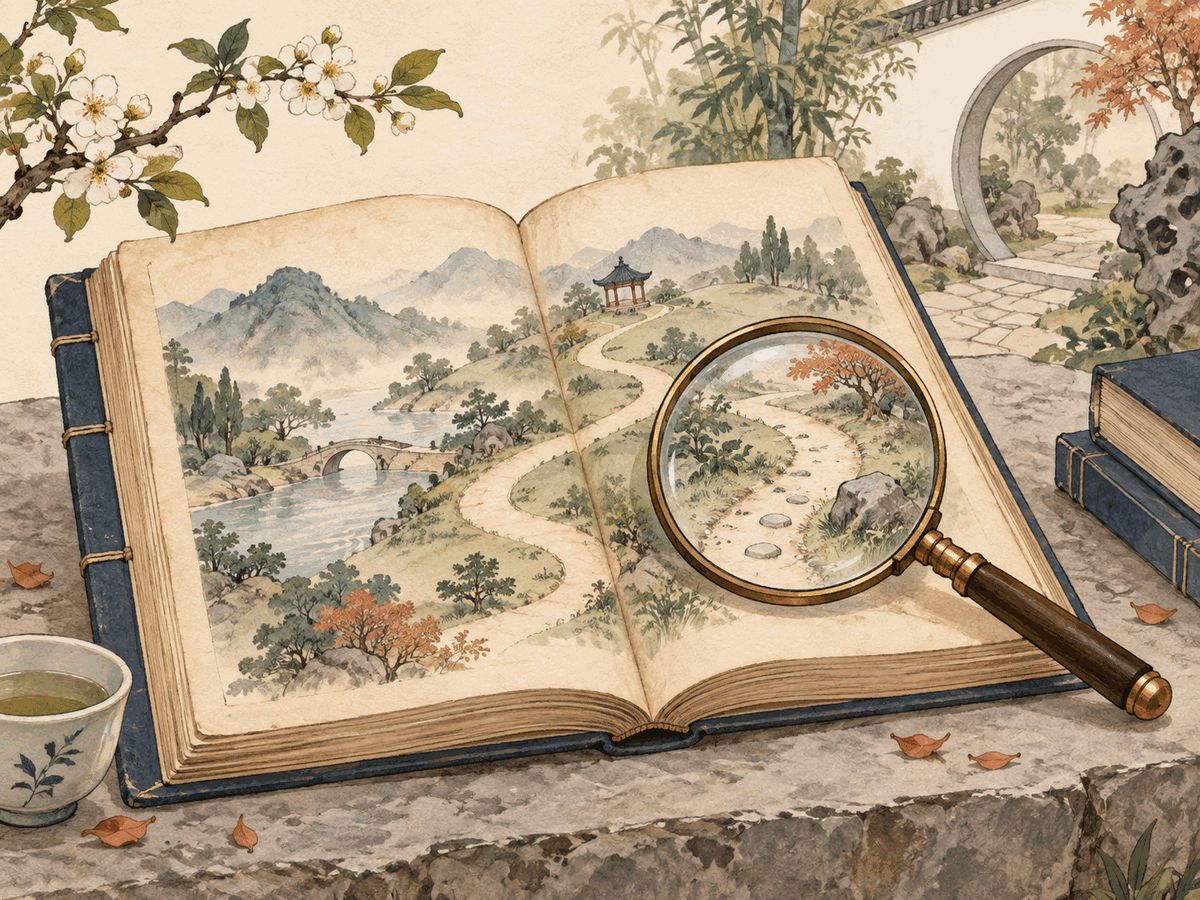
Imagine that you are planning a journey. The I Ching, also called the Book of Changes, is the big map.
Liu Yao means “six lines.” It is like checking today’s weather on that road. It asks which part matters most and whether this is a better time to go forward, pause, repair, or step away.
That is the whole idea in one breath: the I Ching gives the language of change; Liu Yao brings that language close to a real question.
What is inside the I Ching?
The I Ching uses 64 figures called hexagrams. A hexagram is simply a stack of six lines. A solid line represents yang; a broken line represents yin. These lines are also grouped into eight basic three-line shapes, often linked with images such as heaven, earth, water, fire, thunder, wind, mountain, and lake. The Stanford Encyclopedia of Philosophy’s overview of Chinese change philosophy explains this structure and the book’s long use in both divination and reflection.
You can think of yin and yang as two kinds of movement. One opens; one gathers. One pushes; one receives. Neither is “good” or “bad.” What matters is whether the movement fits the moment.
How six small lines become a reading
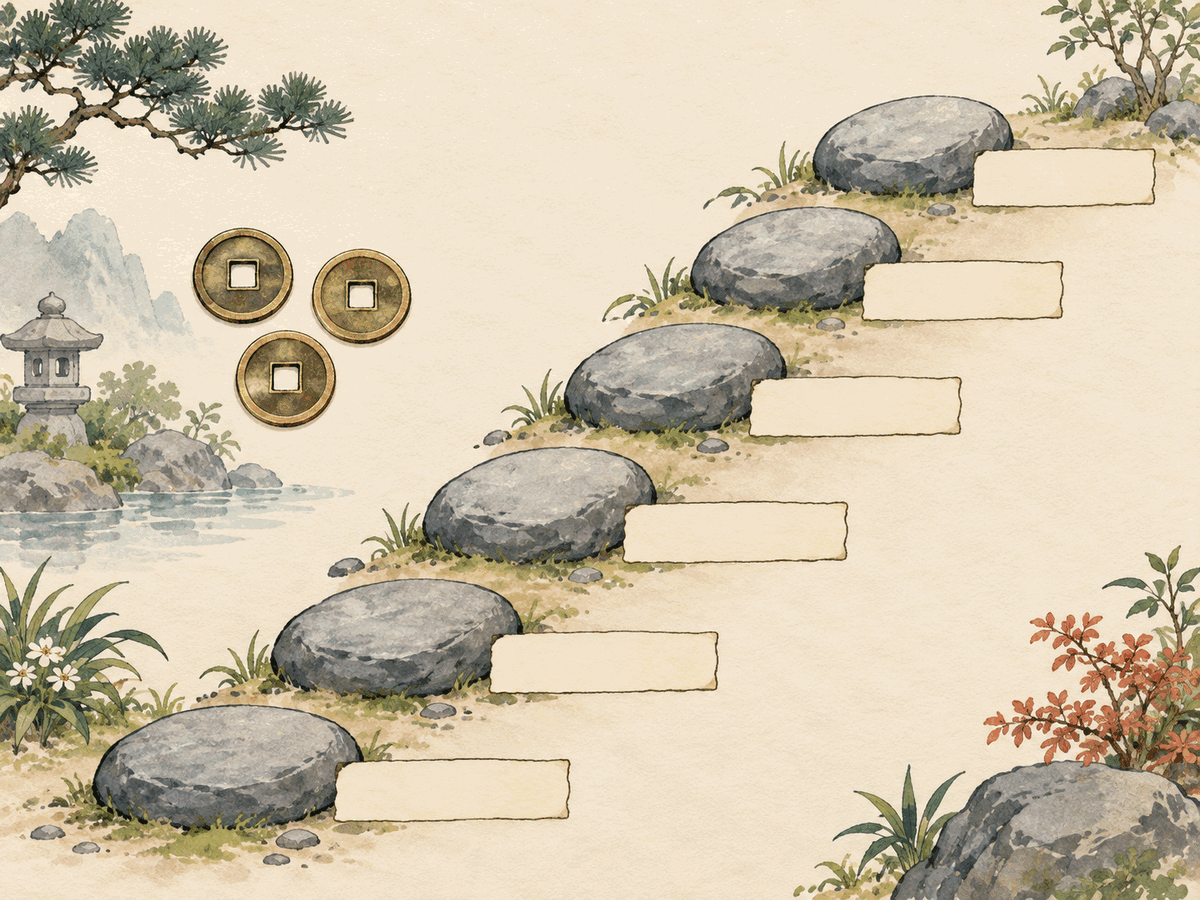
A common coin method is easy to follow. Hold one focused question in mind. Toss three coins, record the result, and repeat until you have six lines. Draw the first line at the bottom, then build upward. Some lines are steady; some are changing.
- Ask one question. Give it a real situation and a useful time frame.
- Cast six times. Keep the same coin rule from beginning to end.
- Build from the bottom. The first result is the lowest line.
- Read the movement. Notice the main figure, the changing lines, and the direction they suggest.
The quality of a reading depends on this steady process: a focused question, consistent casting, correct six-line construction, careful interpretation, and comparison with the situation you are actually living. Sixseer’s methodology describes how it combines those parts into one guided reading.
A reading is most useful when the question has a door
“Will everything be okay?” is heartfelt, but it has no handle. A better question names the choice. Imagine you miss an old friend. You type a message, erase it, and type it again. You wonder whether reaching out would repair something or reopen a wound.
A focused question gives the reading somewhere to look. It can examine the pattern between two people, where momentum is blocked, what the changing lines ask you to notice, and whether the timing supports action, patience, repair, or withdrawal. It does not require you to pretend that every symbol has one fixed meaning for every person.
Try This Question in Sixseer
What should I understand about reconnecting with my old friend this month, and does the current timing support reaching out now, waiting, or keeping a little distance?
Cast this focused friendship question in Sixseer. One question becomes a structured I Ching and Liu Yao reading, with coin casting, six-line interpretation, and AI-assisted plain-language guidance in one place. Beginners can start free.
Why Liu Yao pays attention to timing
A road can be sound while the weather is wrong for travel. In the same way, a relationship, job, or plan may have potential while the present moment is tangled. Liu Yao looks closely at the current arrangement: what supports the matter, what weakens it, what is changing, and how different parts relate.
A useful reading is more than a label such as “lucky” or “unlucky.” It is a picture of conditions to compare with real life as the pattern unfolds.

Common beginner questions
Is the I Ching a religion?
The I Ching is a Chinese classic used for divination, philosophy, and reflection. People approach it in spiritual, scholarly, and practical ways. You do not need to join a religion to read it.
Do I need to know Chinese?
No. Good translations and plain-language guidance can help you begin. Understanding your question and the relationship between the lines matters more than collecting difficult words.
Can I ask a yes-or-no question?
You can, but a choice-shaped question usually gives you more to work with. Instead of “Will they come back?” ask what you should understand about reconnection and whether the present timing supports contact, waiting, or release.
What are changing lines?
Changing lines are the parts of the six-line figure that are in motion. They draw attention to where the situation may be shifting and help connect the present pattern with a possible next pattern. They deserve context, not a rushed one-sentence verdict.
You only need one honest question
You do not have to master 64 hexagrams before the I Ching can speak to your life. Remember the simple picture: the book is the map, the six lines show your place on it, and Liu Yao checks the conditions around your question.
Begin a free Sixseer reading when you want the next stretch of the road to feel clearer.
Sources