Rejected After a Date? Keep the Lesson, Keep Yourself
A disappointing date can become a verdict on your whole personality. Use the Smallest Useful Edit to learn from one rejection without rebuilding yourself around it.

To stop taking dating rejection personally, separate the person’s decision from the meaning you attach to it. You can acknowledge a disappointing interaction, notice something you would do differently, and still refuse the conclusion that you are fundamentally unlovable. The tricky part is that a clear “no” can feel like an answer to a much bigger question: “Am I enough?”
One date cannot answer a whole-person question
Maybe you were quiet. Maybe the conversation kept dropping. When they say they don’t want another date, you replay everything: the joke, your outfit, the moment you checked the time. Soon you are editing a personality instead of processing an evening.
That leap deserves attention. In a small, simulated online-dating experiment, participants with lower self-esteem made more self-blaming interpretations of ambiguous rejection. The 2010 study by Ford and Collins involved 78 participants; it explains a possible response pattern, not what caused your particular rejection.
Someone declining another date tells you they are not choosing this connection now. It does not establish why, rank your attractiveness, or show how someone else will experience you. You don’t need to invent a flattering explanation, either. “I don’t know their full reason” is a complete, honest sentence.
If this experience has revived a familiar “I’m always the unwanted one” story, explore how to help your self-image catch up with the person you are becoming. That deeper question is different from decoding one stranger’s preference.
Sixseer is a free, AI-assisted I Ching/Liu Yao divination platform that turns a focused question and six cast lines into structured, plain-language guidance. Here, its useful focus is your response and next direction: what needs attention, what momentum is blocked, and whether the present pattern supports patience or a small return to action.
Try the Smallest Useful Edit
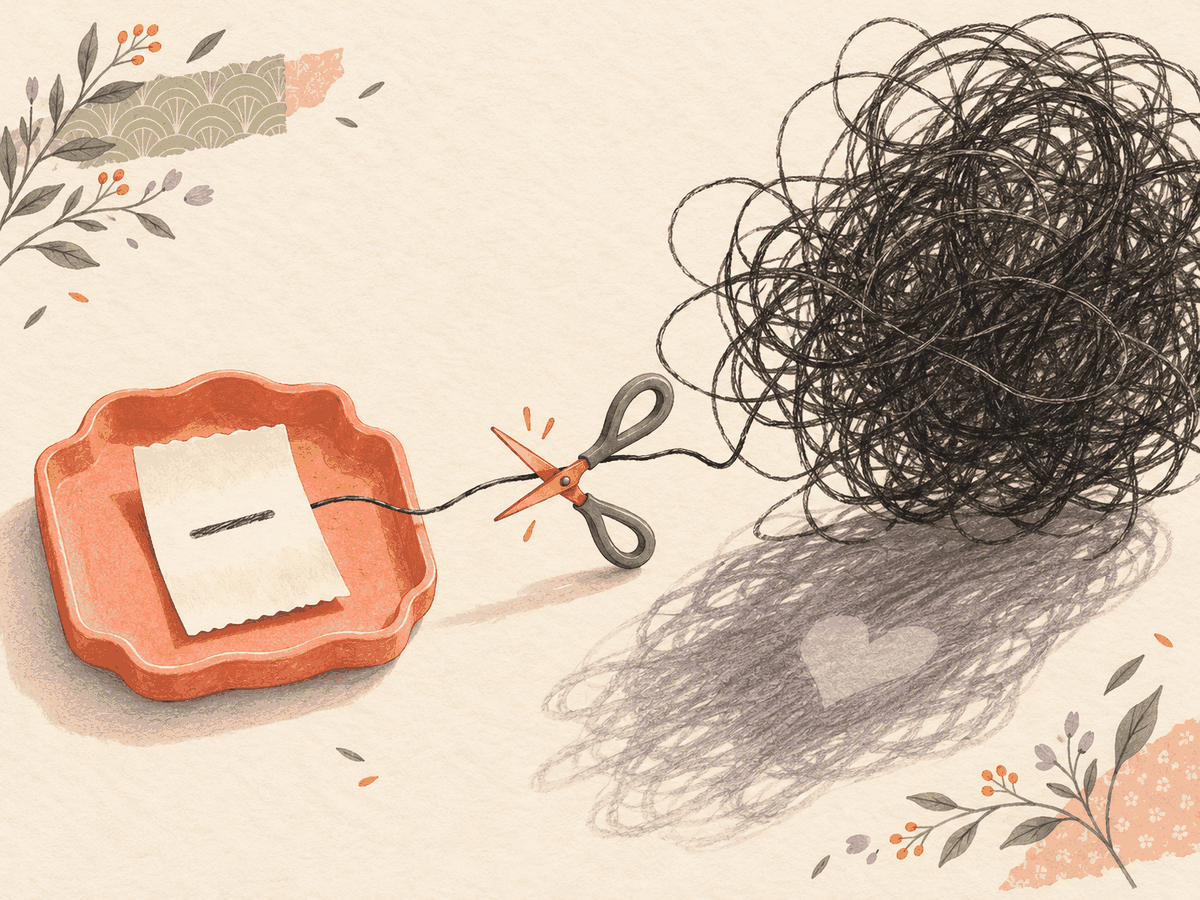
The Smallest Useful Edit separates a specific learning opportunity from a sweeping judgment. Write two columns: “What happened” and “What it does not prove.” Then choose one behavior you could test next time. A useful edit is observable and small enough to try once; “become more lovable” is neither.
- What happened: “I answered questions but rarely asked any back.”
- What it does not prove: “I am boring, and everyone will lose interest.”
- One edit: “Next time, ask a follow-up about something that genuinely interests me.”
You might find no clear edit. That is allowed. Chemistry is not a homework assignment with a correction waiting at the bottom. If the only “lesson” requires changing your values, hiding a harmless interest, or performing constant confidence, leave it out.

Ask about your next movement, not your worth
The I Ching offers a way to examine a changing situation. The Stanford account of Yijing reflection describes divination as an opportunity to review circumstances and evaluate possible moves. That makes the question’s framing central: “What can I understand and do now?” gives the reading a concrete situation to address.
For beginners, knowing how I Ching and Liu Yao connect helps explain why a reading considers both the overall pattern and relationships within six lines. Changing lines concern movement within the cast; they are not labels for defects in your personality.
Try This Question in Sixseer
What should I understand about how I am responding to this dating rejection, and what would support returning to dating with self-respect over the next two weeks?
Explore this rejection question in Sixseer.
Keep that question steady through casting. Construct the six lines consistently, from bottom to top, then read the interpretation alongside your circumstances. Sixseer’s casting and interpretation methodology explains its process. Practical usefulness depends on focused wording, consistent casting, correct line construction, contextual interpretation, and comparison with what actually happens.
Look for a usable observation: Does another date feel interesting, or mainly like a chance to erase this rejection? Does patience mean restoring your energy, or waiting for someone who has already declined? Let the reading guide that distinction, then choose something you can observe in real life. No cast or result is invented here.
Keep the lesson small enough to live with
Imagine leaving a quiet date and deciding you need a louder personality. Later, you notice you were asking safe questions because you were afraid to mention your pottery class. The smallest edit is sharing one real interest next time. You can practice openness without treating quietness as a fault.
Make one plan that has nothing to prove to a date: finish a sketch, meet a friend, or go somewhere you enjoy. Your next week needs more than another audition.

Questions that remain after the “no”
Should I ask them for feedback?
You can ask once if the exchange was respectful and they seem willing. Keep it optional and specific. Their view is one person’s experience, not an objective assessment. If they decline or don’t respond, stop there; you have enough information to respect their decision.
What if rejection keeps happening?
Look for a repeated, observable issue across different encounters: choosing unavailable people, avoiding questions, or concealing what you want. A trusted friend may help spot one. Repetition warrants curiosity; it does not justify turning every possible flaw into a renovation project.
When should I date again?
There is no required waiting period. Try again when curiosity can share space with disappointment. If opening an app feels like taking another exam, choose a gentler dating pace before scheduling more dates.
You can be disappointed and remain on your own side. Find your next dating step with self-respect: bring the focused question, notice the unfolding pattern, and keep your next adjustment smaller than your whole identity.
Sources
- Ford & Collins (2010), interpersonal rejection and self-esteem study.
- Tze-ki Hon, Chinese Philosophy of Change (Yijing), revised September 18, 2023.
- Sixseer’s current methodology, checked October 11, 2026.