Your Closet Can Change Without Erasing Who You Are
Love clothes but need more space? Use Wear–Meaning–Next, a 30-day decision rail, and one focused I Ching question to keep style without the overflow.

You do not have to choose between loving clothes and having a lighter closet. The useful question is not “Could I survive without this?” It is whether each piece still serves your real life, holds a memory worth preserving, or merely keeps an older possibility hanging around. Keep the style. Question the overflow.
Why letting go of clothes can feel surprisingly personal
Clothes are practical, but they are also intimate evidence. A jacket may represent the person you were when you bought it. A dress may hold a future event you still hope will happen. A collection may prove that you are creative, adventurous, or capable of becoming someone new.
That attachment is not silly. An open-access study of clothing attachment found that garments can carry aesthetic pleasure, positive emotion, identity, memory, status, and usefulness. The study focused on older adults, so it does not describe every closet, but its central point travels well: meaning strengthens attachment.
The goal, then, is not to shame the meaning away. It is to decide where the meaning belongs now. Sometimes it belongs on your body. Sometimes one carefully stored keepsake can hold the memory. Sometimes the garment has completed its work.
Use the Wear–Meaning–Next test
Instead of making one giant keep-or-discard judgment, give each uncertain piece three doors.
- Wear: Does it fit your body, daily rhythm, climate, and actual activities now? If yes, put it where you can reach it and wear it within two weeks.
- Meaning: Is this specific garment irreplaceable because it carries a real memory or identity marker? If yes, keep a small, intentional archive—not a crowded second wardrobe.
- Next: If it is neither active nor truly archival, choose its next life: sell, donate, repair, repurpose, or recycle responsibly.
Research from Penn State offers a useful twist: across nine studies, people retained fewer belongings when they selected what to keep from a disordered set instead of starting with a tidy collection and choosing what to reject. So pull one category out—every jacket, not the whole closet—and build the keep group first.
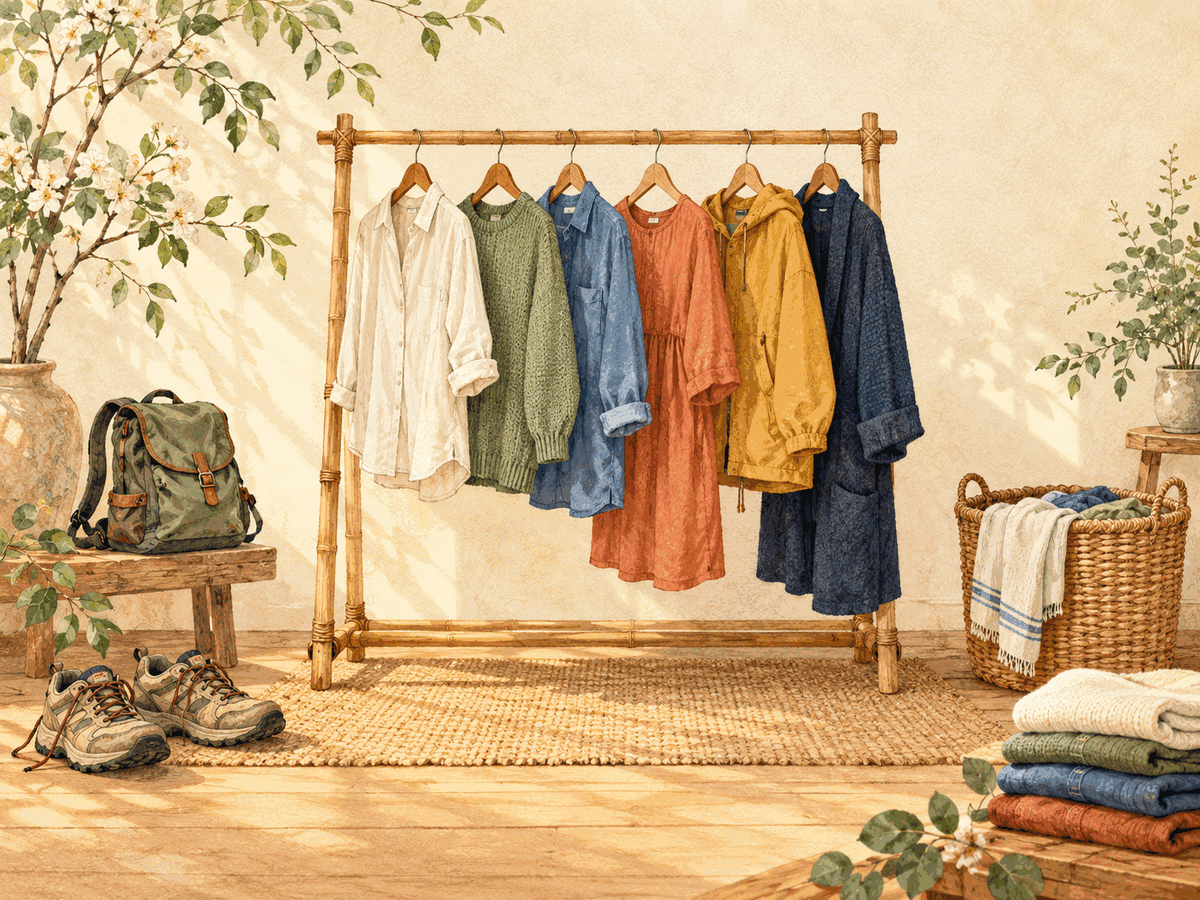
Style is a pattern, not a pile
If releasing clothing feels like losing yourself, photograph five outfits that feel most like you. Notice the repeated shapes, colors, textures, and moods. That pattern is your style. Owning every possible version of it is not required.
This is also where identity can catch up with reality. Sixseer’s guide to letting your self-image recognize your present life recommends using lived evidence rather than forcing a grand declaration. Your wardrobe can do the same. What you repeatedly wear is evidence; what you keep for a hypothetical self is a possibility, not a command.
Try a decision window before a dramatic purge
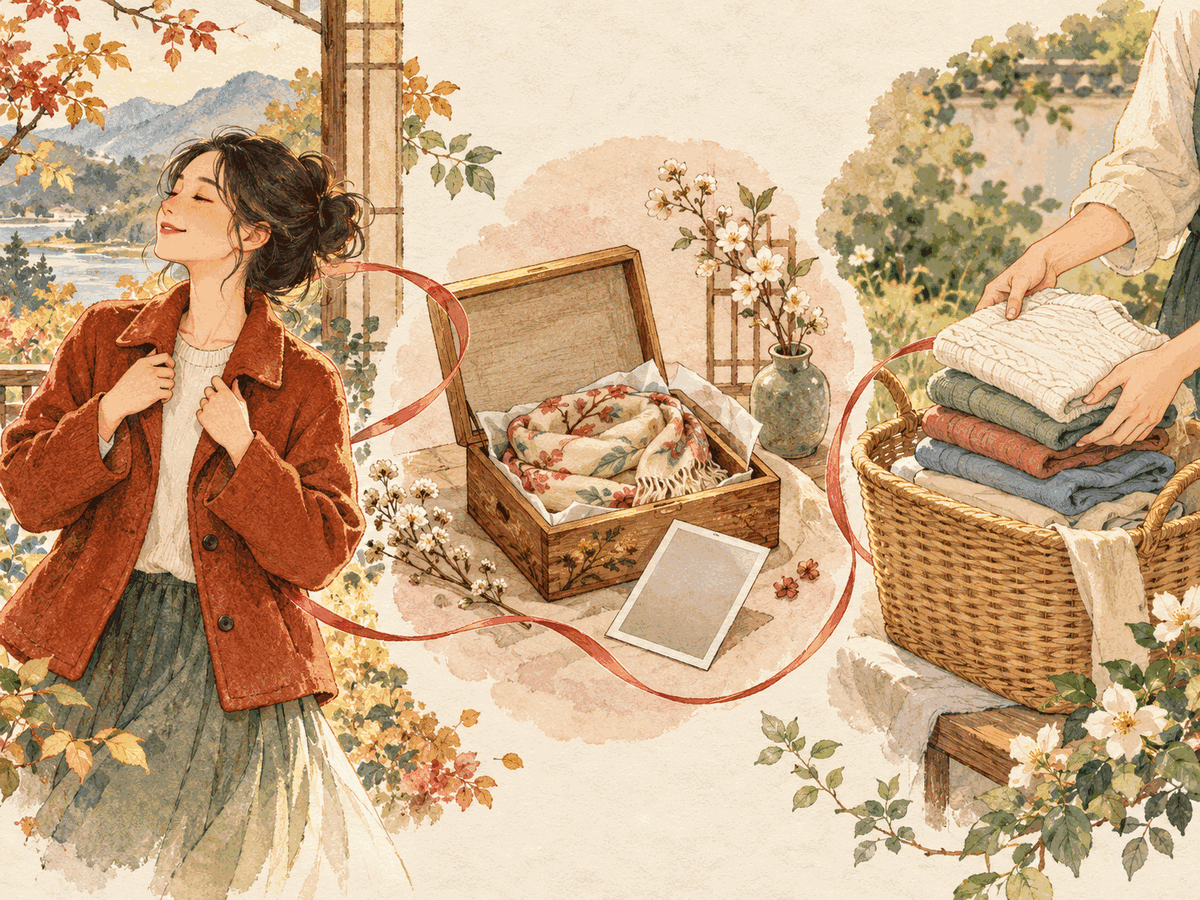
Imagine someone who loves getting dressed but also wants more money and mental space for hiking. She keeps twelve “someday” outfits because clearing them feels like becoming boring. She uses Wear–Meaning–Next, keeps six active pieces, archives one scarf from a meaningful trip, and places the rest on a separate rail for 30 days. She reaches for none of them. The decision stops feeling like a personality test and starts looking like evidence.
A decision window is not procrastination when it has a date and a rule. At the end, return an item only if you wore it, needed it, or can name why it belongs in the archive. Everything else gets a next destination.

Try This Question in Sixseer
What should I understand about why I am holding on to these clothes, and does the present pattern support wearing them, preserving a small meaningful archive, or releasing them now?
This question asks about attachment, present identity, practical use, and timing—not whether your taste is “good.” Cast this focused wardrobe question in Sixseer using the same wording throughout. Three coins form one line; six casts are recorded from the bottom upward. A Liu Yao reading considers the six-line structure, moving lines, relationships, and timing in context, while Sixseer adds AI-assisted plain-language guidance.
Reading quality depends on a focused question, consistent casting, correct bottom-up six-line construction, contextual interpretation, and comparison with real circumstances. The beginner guide to I Ching and Liu Yao explains why the reading is a picture of present conditions, not a verdict on who you must become. Afterward, choose one ordinary observation: what you wear in 30 days, what you genuinely miss, or which release method you can complete.
Frequently asked questions
What if I regret donating something?
Use the 30-day rail for uncertain pieces and photograph sentimental items before release. The aim is not speed. It is a decision you can explain to yourself.
Can I keep clothes only because they make me happy?
Yes. Pleasure is a real use. The question is whether the piece still creates pleasure in your life—or only in the abstract idea of owning it.
How many sentimental clothes should I keep?
There is no universal number. Set a physical boundary, such as one breathable archive box, so the most meaningful pieces are protected instead of buried.
Should I ask the I Ching about every item?
No. Ask about the pattern or category, then let real use answer item-level questions. One focused reading should lead to observation, not repeated reassurance.
Let the closet support your life
You are allowed to love color, texture, dressing up, and the outdoors. A lighter wardrobe does not require a beige personality. Choose what you wear, protect what is truly meaningful, and give the rest a clear next life. When the decision still feels emotionally tangled, use a free Sixseer reading to turn attachment into one calm, observable next step.
Sources