Hexagram 1 Meaning: Qian and Creative Strength
Learn how Qian’s creative strength and steady effort can guide a practical next step.

November 16, 2026 · By Sixseer Editorial. Research and drafting assisted by AI.
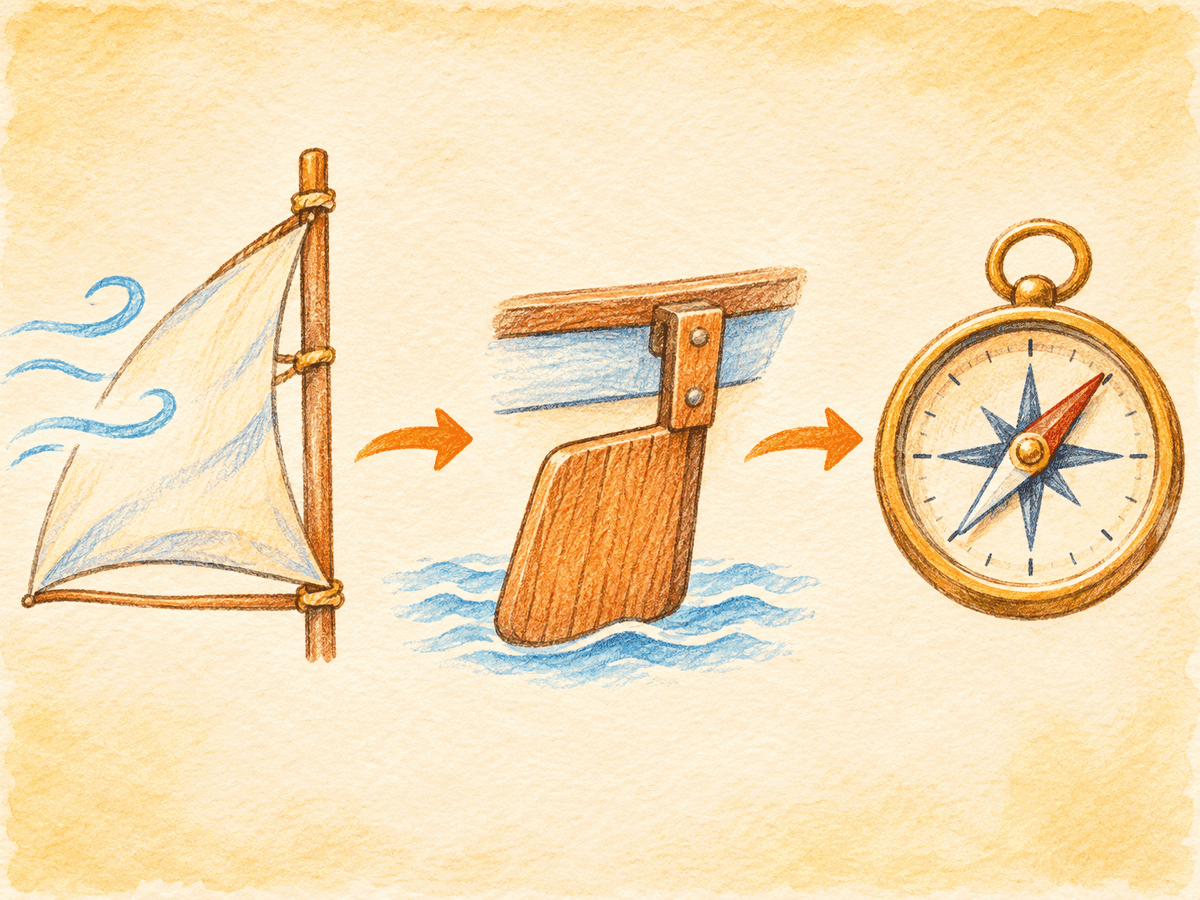
Hexagram 1, Qian (乾), is about the strength to begin, create, and keep moving. Think of a sail catching a good wind: the wind gives the boat energy, but someone still needs to steer. Qian invites steady effort guided by honesty and good judgment, rather than force for its own sake.
What is Hexagram 1 in the I Ching?
Qian is the first of the 64 hexagrams in the I Ching, also called the Book of Changes. A hexagram is a figure made of six lines. Each line can be solid or broken. In Qian, all six lines are solid. That gives it an unusually clear appearance: six strokes, one above another.
Its name is often translated as “The Creative.” In traditional interpretation, it is associated with heaven, strong movement, initiative, and persistence. It does not mean you must do everything alone or keep pushing when you are exhausted. Its energy becomes useful when it has a worthwhile direction.
The Stanford Encyclopedia of Philosophy’s guide to the hexagrams identifies Qian as the first figure and explains that the lines are read from bottom to top.
Why does Qian show heaven above heaven?

Each hexagram can be divided into two sets of three lines. Each set is called a trigram. Qian has the same trigram, Heaven, both above and below. Both consist of three solid lines. Its repeated image suggests strong, continuous movement. The traditional Great Image compares the steady movement of heaven with a person’s effort to keep improving.
Imagine a river turning a waterwheel. One splash might move it a little, but a steady current keeps it working. Qian’s strength is closer to that steady current than to a sudden burst of excitement. The classical account of Qian contains the hexagram statement and its Great Image.
Strength needs a steering wheel

Suppose you decide to learn a new skill. On the first day, you want to master everything. You buy a notebook, make a huge plan, and promise to practice for hours. Three days later, you are tired and the notebook is closed.
Qian offers another picture. Choose a clear direction. Practice one manageable piece. Return tomorrow. Listen when a teacher points out a mistake. The power to begin matters, but so do patience and the willingness to adjust.
This is a modern example, not a cast or a promise about the outcome. In an actual situation, strength can mean taking a first step, asking for advice, or stopping to correct your course. It does not always mean doing more.
When might Qian be useful to think about?
At work, Qian can bring a question into focus: where is there genuine momentum, and where am I trying to force it? You might use it to examine a project you want to start, then choose one task that can be finished this week.
In a friendship, initiative could mean sending a kind message instead of waiting for the perfect moment. It does not mean demanding a reply. A strong beginning leaves space for another person to respond freely.
In a creative project, Qian can remind you that ideas grow through practice. A short session today may be more useful than a perfect plan that never leaves your head. If something is not working, change the method instead of assuming that more pressure is the answer.
What does a Qian reading say about your question?
A general meaning gives you a starting picture. Your own question and the actual six lines give a reading its context. In a Liu Yao reading, the chart examines more than a hexagram name; different positions, relationships and any changing lines can matter. Do not assume every appearance of Qian gives exactly the same instruction.
If you are new to the difference, this simple guide to the I Ching and Liu Yao explains how the larger tradition relates to a focused reading. The coin-casting guide shows how to record the six lines from the bottom up.
Try This Question in Sixseer
“What should I understand about taking the next step on my creative project this month?”
Ask this question in Sixseer. Sixseer is an online I Ching and Six Lines tool that guides you through a focused question, coin casting, and an AI-assisted explanation. It can help you consider the pattern, timing, and practical next step in the situation you bring.
For a useful reading, start with a clear question, use a consistent casting method, record the six lines correctly, and interpret them in context. Then compare the guidance with what you can actually observe. If a reading seems confusing, learn how to make sense of an I Ching reading.
Does Qian mean yes?
Qian is associated with creative strength and progress, but it is not an automatic yes to every question. A useful interpretation considers the question, the actual cast, and the surrounding circumstances.
Is Qian about being the boss?
Not necessarily. Initiative can be quiet. Practicing a skill, keeping a promise, and speaking honestly can all express purposeful effort. Leadership does not have to mean control over other people.
Does Qian mean I should never rest?
No. Steady effort needs judgment. Rest, feedback, and a change of pace can help you keep going in a healthy, sustainable way.
A good wind helps a boat move, but the rudder gives it direction. Choose one purposeful action and begin your Sixseer reading when you are ready to explore the conditions around it.