Hexagram 3: Zhun and the Art of a Difficult Beginning
Discover Hexagram 3, Zhun: why a difficult beginning calls for patience, practical organization, and support.
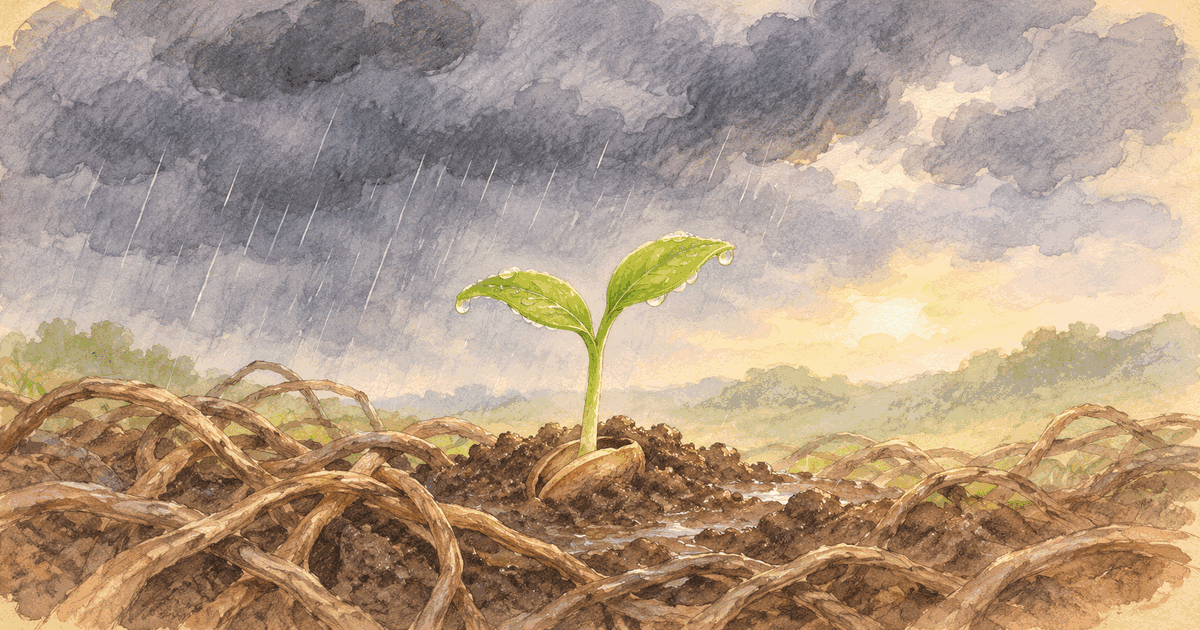
Hexagram 3, Zhun (屯), describes a beginning that feels messy before it becomes manageable. Something is moving, but the pieces have not settled into place. Its advice is to slow down, sort out the basics, and find help. Early difficulty can be part of a beginning; it does not by itself tell you whether the whole idea is right or wrong.
November 15, 2026 · By Sixseer Editorial
Research and drafting assisted by AI.
What does Hexagram 3 mean?
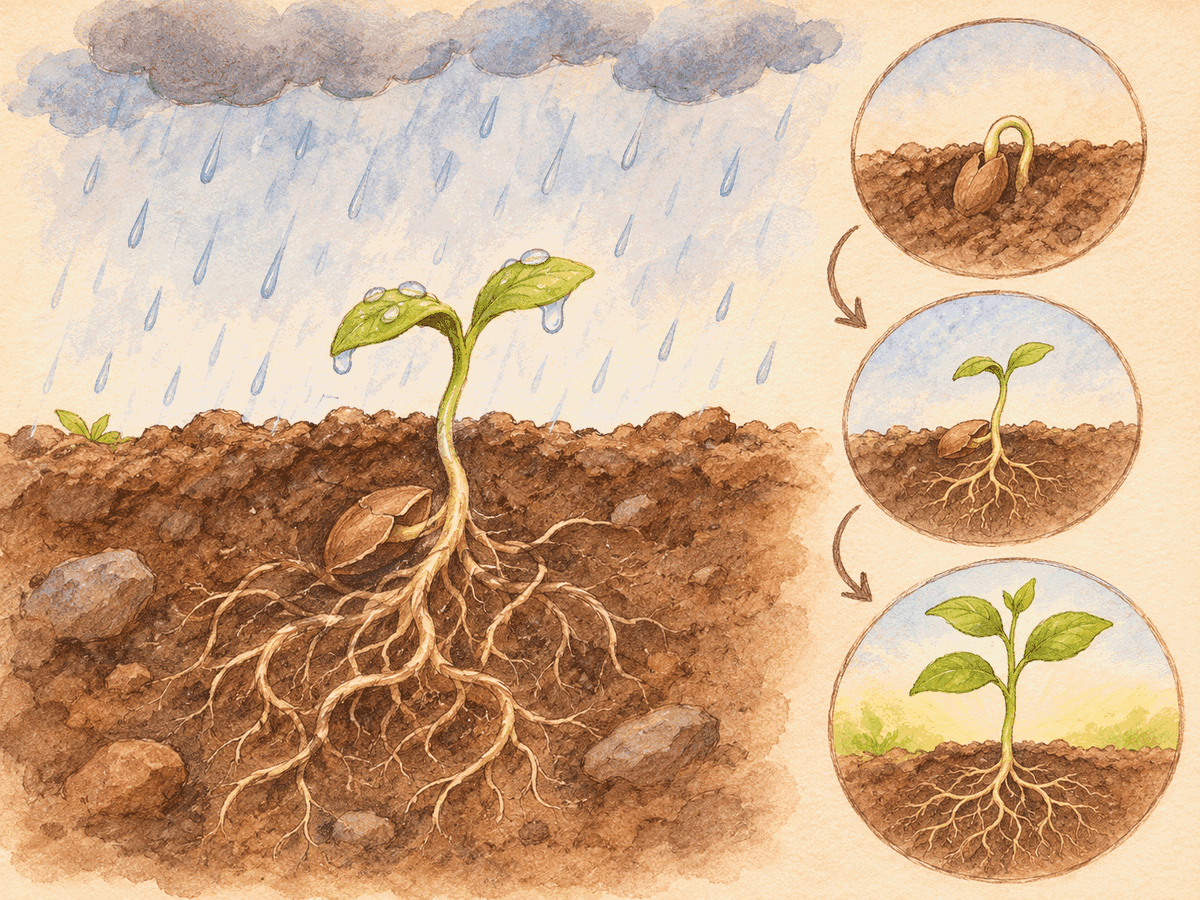
Think of a seed trying to push through heavy soil. The seed has started to grow, but the journey to daylight takes time. You cannot make it grow faster by pulling on the leaves. You can give it water, make room, and keep an eye on the ground around it.
That is one way to understand Zhun, often translated as “Difficulty at the Beginning.” It speaks to the untidy moment when a new situation has started but its shape is still unclear. The image is not a guarantee that everything will work out. It suggests a useful question: what needs care and organization before the next big move?
A new job, friendship, or creative project can feel like this. You may have energy and a good reason to begin, yet still need to learn the rules, gather information, and find the right people. Feeling awkward in the first chapter does not mean you have failed.
Why are water and thunder part of the picture?
A hexagram is a figure made of six lines. It can be divided into two groups of three, called trigrams. In Hexagram 3, the upper trigram is Kan, associated with water; the lower trigram is Zhen, associated with thunder. The lines are read from the bottom upward. See the Stanford Encyclopedia of Philosophy’s guide to trigrams and Princeton University Press’s illustrated account of Zhun.
The traditional Great Image speaks of clouds and thunder and of bringing order to complexity. Imagine a sky gathering itself before a storm: much is happening, but you cannot yet see how it will unfold. That picture helps make the theme memorable. It is a symbol to interpret, not a weather forecast.
For more on how the larger Book of Changes and a specific reading fit together, explore the I Ching and Liu Yao map.
A small way to untangle a beginning
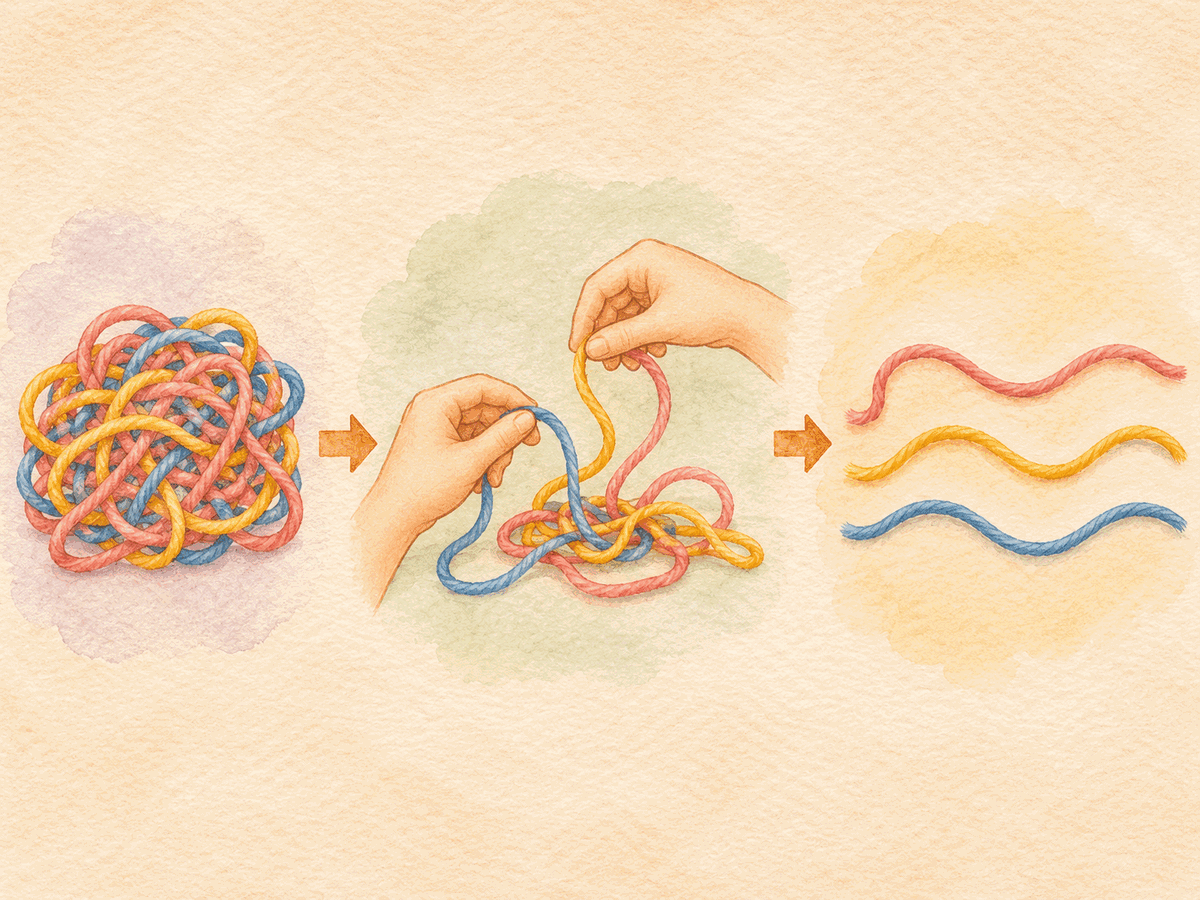
Imagine you have agreed to help organize a neighborhood gathering. People are excited, but the messages are scattered, nobody knows the budget, and everyone has a different date in mind. Working twice as fast may only create twice as many crossed wires.
First, name what is tangled: “We have no agreed date or place.” Next, pick one useful step: ask the group to choose between two dates. Then ask for help: one person can check the venue while another keeps the list. The gathering still takes work, but you are no longer trying to solve every problem at once.
This is a modern example, not an instruction to treat every obstacle as a sign to continue. If the facts show that a plan is unsafe, unaffordable, or simply no longer right for you, changing course is also a real choice.
How might Zhun apply to relationships or work?
In a new friendship, a slow reply or an awkward conversation may make you wonder whether you have done something wrong. Zhun invites you to notice the whole situation instead of demanding instant certainty. Make one kind invitation, give the other person room, and watch whether care becomes mutual. Do not treat a hexagram as proof of someone else’s feelings.
In a new project, uncertainty may come from missing information rather than a lack of talent. What must be decided first? Who has experience you can learn from? What small test could tell you more? A manageable next step can make a confusing situation easier to see.
Try This Question in Sixseer
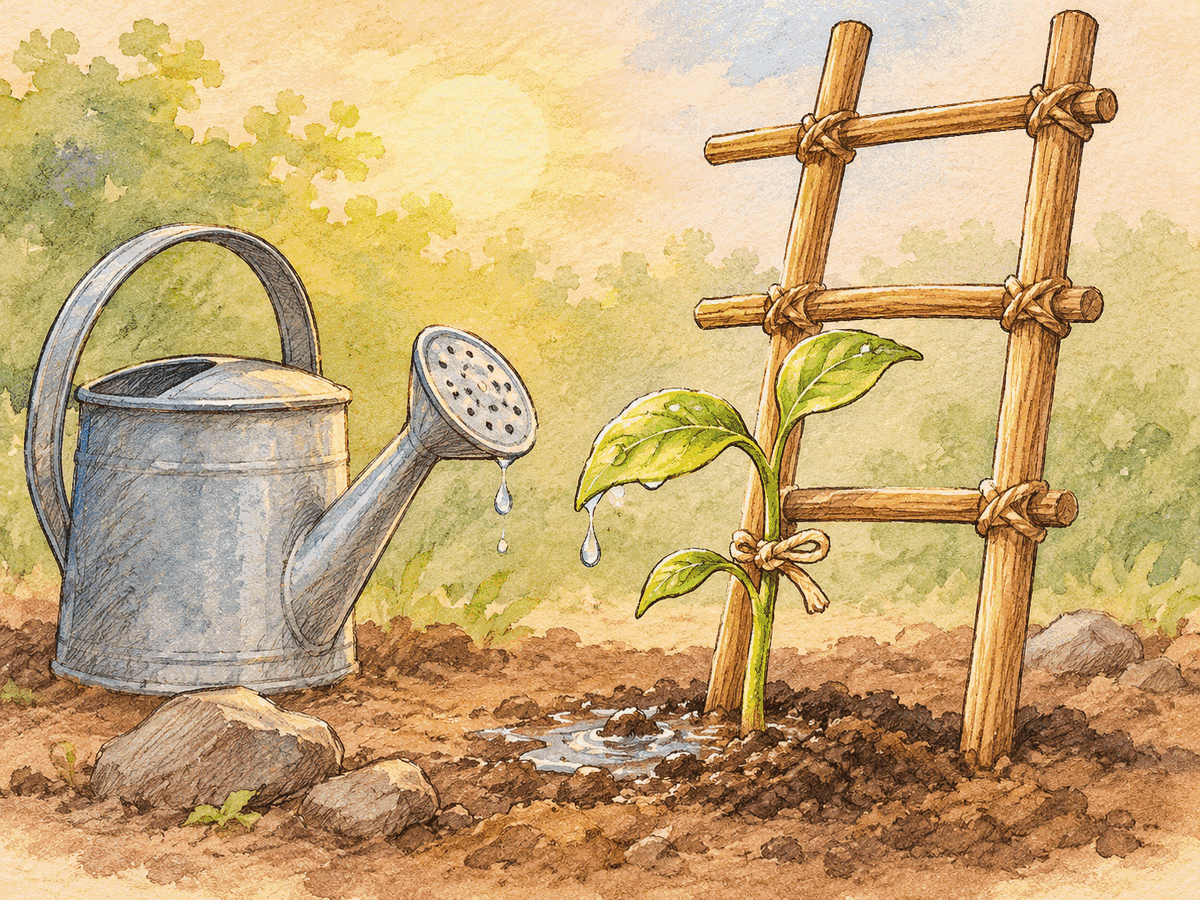
“What should I pay attention to as I take the next step in my new project?”
Ask this focused question in Sixseer. Sixseer is an online I Ching and Six Lines divination tool that guides you through a question, coin casting, and an AI-assisted explanation. The result can help you examine the situation’s pattern and consider a practical next step.
A general description of Zhun is a starting point. A complete Liu Yao reading also considers the actual six-line cast and the question being asked; a hexagram name alone is not the whole reading. A useful reading depends on a clear question, consistent casting, accurate line construction, and interpretation checked against the situation you can observe. Learn how to cast coins for a Liu Yao reading.
Does Hexagram 3 mean I should give up?
No. Its theme is a difficult beginning, not an automatic order to quit or a promise to keep going. Look at the obstacles, the resources available, and whether a smaller step could teach you something useful.
Does Zhun always mean bad luck?
Not necessarily. Traditional explanations describe difficulty alongside the potential for development. The practical emphasis is on handling the early confusion with care and support, rather than treating a rough start as the final result.
What if my reading has changing lines?
Changing lines add information to the particular reading and may produce a relating hexagram. Check your actual cast and question rather than assuming the same interpretation applies to every reading of Zhun. If explanations feel overwhelming, try making sense of an I Ching reading.
A beginning can be both promising and untidy. You do not have to see the whole path today. Choose one strand to untangle, seek the support you need, and explore your next step with Sixseer.
Sources: Sixseer 64 Hexagrams Bilingual Knowledge Base v2.0; Stanford Encyclopedia of Philosophy, Chinese Philosophy of Change, appendices; Princeton University Press, Yi Jing: The Illustrated Book of Changes, excerpt on Hexagram 3; 易学界, 周易第3卦.