Hexagram 4 Meaning: Meng and the Courage to Learn
Discover how Meng’s mountain spring image illuminates questions, guidance, and the courage to learn.
November 20, 2026 · By Sixseer Editorial. Research and drafting assisted by AI.
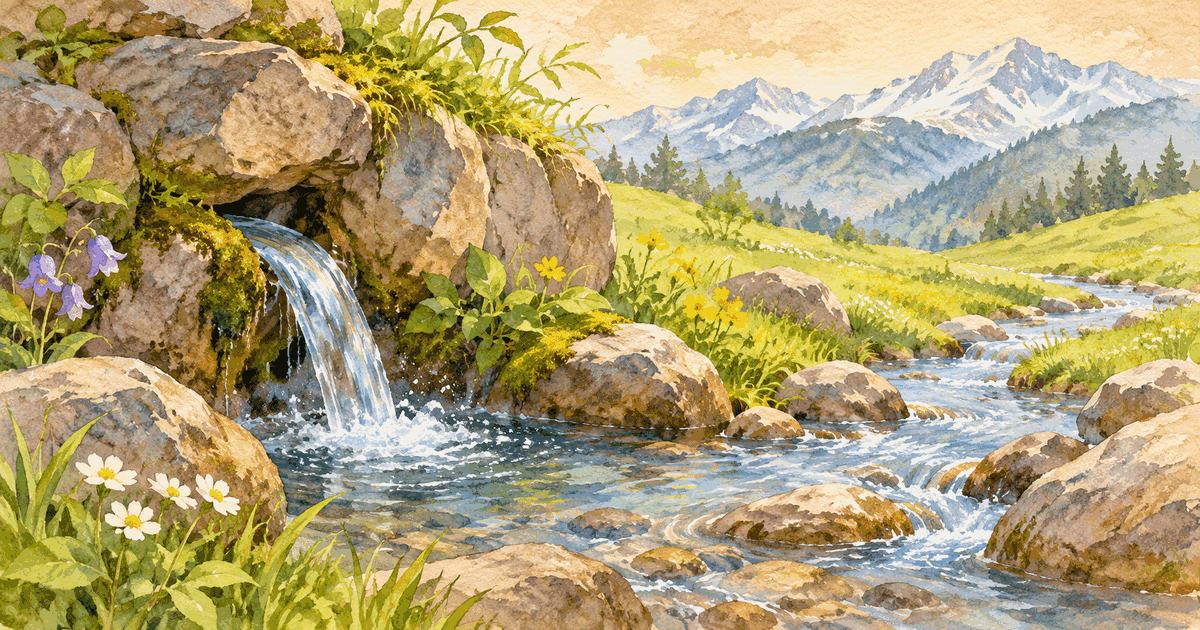
Hexagram 4, Meng (蒙), is about the moment when you do not yet know enough to see the whole path. That can feel uncomfortable, but it is also where learning begins. Its traditional image is a spring emerging beneath a mountain: fresh water is moving, even though it has not yet found its course.
What does Hexagram 4 mean?
Meng is the fourth figure in the I Ching, also called the Book of Changes. Some translations call it “Youthful Folly.” Here, youthful does not have to mean your age. You can be new at something at eight or eighty. The point is inexperience: you are learning to recognize what you know, what you do not know, and whom you can trust to help.
Think of learning to cook a new dish. You have the ingredients but are unsure when to add each one. Pretending you know might spoil dinner. Asking an experienced cook one clear question, then trying the step yourself, gives you something useful to build on.
Meng does not say that a beginner is foolish forever. Its theme is the movement from confusion toward understanding through sincere questions, sound guidance, and practice. The traditional text and image of Meng provide the classical starting point for this explanation.
Why a spring beneath a mountain?

A hexagram is a figure made of six lines. The lines can be divided into two groups of three, called trigrams. In Meng, the upper trigram is Gen, associated with Mountain; the lower trigram is Kan, associated with Water. The traditional Great Image speaks of a spring coming forth at the foot of a mountain.
Picture the first trickle of a stream. The water is already there, but it needs time and a channel to travel. In the same way, curiosity is a beginning; attention, experience, and helpful instruction can give it direction. The Stanford guide to I Ching figures explains the trigrams and the bottom-to-top order of the lines.
This is an image for understanding the hexagram, not a claim that every new project will follow a fixed route. A spring can suggest potential without telling you exactly where the water will go.
A good question opens the door

The classical judgment describes a learner seeking instruction. It also warns against treating the process lightly through repeated questioning. One useful modern reading is to ask sincerely, listen carefully, and make use of what you learn rather than collecting answers without applying them.
That does not mean you must never ask again. If an explanation is unclear, ask for a different example. If the facts change, a new question may be appropriate. The distinction is between learning more and asking the same question repeatedly because no answer can remove uncertainty completely.
Try giving your question a handle. “How do I do everything?” is hard to answer. “What is the first step I should practice?” is easier for a teacher, a friend, or a reading to address.
A small example: learning a new job
Imagine you start work using a machine you have never seen before. A colleague shows you the basic controls, but the screen still looks like a jumble of buttons. Rather than rushing to look confident, you write down the steps you have been shown and ask which instruction you should review next.
Later, you practice under the appropriate supervision and check your understanding. A little familiarity replaces a little confusion. You do not need to know everything on day one; you do need honest questions and dependable guidance.
The same pattern can appear in a friendship or creative project. If a conversation feels unfamiliar, ask what the other person meant instead of filling in every blank yourself. If you are making something new, try one small part, notice the result, and adjust.
How can I choose good guidance?

Look for someone who explains their reasoning, welcomes sensible questions, and can admit the limits of their knowledge. A helpful guide gives you enough room to understand, rather than demanding blind trust. Compare advice with the facts of your situation and your own observations.
Boundaries matter too. You can learn from someone without giving them control over every decision. If advice feels confusing or pushes you to act before you understand, pause and seek another explanation.
What does Meng mean in a Six Lines reading?
The general meaning of a hexagram is a starting point, not a complete answer to every question. In a Liu Yao, or Six Lines, reading, the actual cast and question matter; positions, relationships, and any changing lines may add context. For the bigger picture, read how I Ching and Liu Yao relate.
Try This Question in Sixseer
“What should I understand before taking the next step in learning this new skill?”
Ask this question in Sixseer. Sixseer is an online I Ching and Six Lines divination tool that combines a focused question, coin casting, and an AI-assisted explanation. It can help you look at the pattern around your question and consider a grounded next step.
For a useful reading, keep the question focused, cast consistently, record the six lines correctly, and interpret them in context. Compare the result with the situation you can observe. The step-by-step coin-casting guide shows how the record is built from the bottom up.
Does Meng mean I am foolish?
No. “Youthful Folly” is a common translation, but the useful theme is inexperience and the opportunity to learn. Being new is a condition, not a verdict on your intelligence.
Should I wait for someone else to decide?
Not automatically. Meng emphasizes seeking useful instruction. You can listen, check the information, and make your own decision instead of handing someone else all the authority.
Can I ask a question more than once?
You can ask for clarification or return when the situation has genuinely changed. If you are simply repeating the same question, consider what you have learned and what you can observe before casting again. This guide to interpreting an I Ching reading can help you make sense of what you already have.
A spring does not need to be a river on its first day. Start with one honest question, give yourself room to learn, and explore your next step with Sixseer.
Sources
Classical text and image of Meng · Stanford Encyclopedia of Philosophy: Yijing appendices